
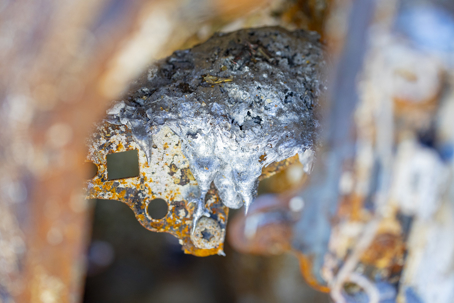
A residential AC unit that corrodes and fails in its seventh or eighth year isn’t defective. In Mobile and Baldwin County, it’s often a predictable outcome of running standard equipment in a salt-air environment without adjusting the maintenance approach. The Gulf Coast climate damages cooling systems in ways that don’t show up on any product data sheet, and the damage accumulates quietly until a repair bill or a failed season makes it impossible to ignore.
We’ve been servicing air conditioning systems in this region since 1969, and salt-related wear is one of the most consistent patterns we see. Across more than 55 years and three generations of our family working in this business, we’ve learned that the difference between a system that reaches 15 years and one that fails at 10 often comes down to whether the owner understood what their local environment was doing to the equipment. What follows reflects what we observe on rooftops, in attics, and at condensers from Dauphin Island to Fairhope to West Mobile.
How Salt Air Damages Outdoor AC Components
Salt particles don’t need a storm to reach your outdoor unit. Gulf breezes carry microscopic salt deposits inland on ordinary clear days, and those particles land on condenser coils and cabinet metal and stay there. Combined with the high ambient humidity of our climate, the deposit doesn’t dry out and blow away. It forms a persistent corrosive film that keeps working between rain events and service visits.
The specific mechanism matters. Standard residential condenser coils pair copper tubing with aluminum fins. Two dissimilar metals in close contact. When salt-laden moisture bridges the gap between them, it creates conditions for galvanic corrosion, a process in which the less noble metal gives up material to protect the more noble one. Aluminum sits lower on the galvanic scale than copper, so the aluminum fins go first. Once fin surfaces begin to pit and degrade, the coil loses the surface area it needs to transfer heat efficiently.
The compressor and fan motor don’t know the coil is compromised. They compensate by running longer cycles, drawing more power, and building up heat stress on components that weren’t designed for extended operation. Energy bills climb. Cooling performance drops. And the additional wear from overworking accelerates failures in parts that had nothing to do with the original corrosion.
Signs Your System Is Under Salt Stress
Some signs of salt damage are visible without any tools. A white powdery residue on the outdoor cabinet or fins, rust streaking on the housing, or a pitted surface on the coil face all point to active corrosion rather than normal weathering. Performance changes are often the first thing homeowners notice before they look closely at the equipment. These warning patterns are worth taking seriously:
- Longer cooling cycles with less output. Corroded fins restrict airflow and reduce heat transfer, so the system runs harder to achieve the same indoor temperature.
- Rising energy bills with no change in usage. Reduced efficiency means more electricity consumed per degree of cooling, often showing up as a gradual climb in monthly costs rather than a sudden spike.
- Short cycling. When the compressor overheats from working too hard, it trips the high-pressure limit and shuts down early, then restarts in a repeating pattern.
- Refrigerant leaks. Corrosion that reaches the copper tubing can create pinhole leaks that drain refrigerant slowly, reducing cooling capacity and eventually damaging the compressor.
- Contactor or electrical failures. Salt and moisture inside the electrical compartment corrode contacts and wiring connections, leading to no-start conditions or intermittent operation.
Why Exposure Varies Across Mobile & Baldwin County
Not every address in our service area faces the same level of salt exposure, and that variation should shape how often you schedule inspections and how aggressively you protect your equipment.
Inland Mobile Neighborhoods
Downtown Mobile sits at the head of Mobile Bay, roughly 31 miles inland from where the bay opens into the Gulf. Neighborhoods like West Mobile, Midtown, and areas north of downtown are buffered by that distance. Salt spray still reaches these locations, particularly during onshore wind events and tropical weather, but the baseline daily exposure is lower than what waterfront properties face. Systems in these areas can typically follow standard annual maintenance intervals, with attention to coil condition as the unit ages.
Waterfront & Barrier Island Properties
Dauphin Island sits directly on the Gulf of Mexico and Mississippi Sound, about 36 to 37 miles south of downtown Mobile by road. Properties there, along with bay-front homes in Baldwin County communities like Fairhope and Daphne, face near-constant salt exposure from open water on multiple sides. For these locations, annual maintenance isn’t enough. We recommend semi-annual inspections, more frequent fresh-water rinses of the outdoor unit, and serious consideration of coastal-rated equipment at replacement time.
The Indoor Equipment Problem
Most salt-air discussions focus entirely on the outdoor condenser, but attic-mounted air handlers, common throughout this region, face their own stress from Gulf Coast conditions. High humidity in unconditioned attic spaces accelerates condensate drainage problems and restricts airflow through the indoor coil. An evaporator coil that stays too wet becomes a site for biological growth that reduces efficiency and can eventually cause water damage. Indoor equipment isn’t immune to Gulf Coast wear just because it’s sheltered from direct salt spray.
Steps That Slow Salt-Air Wear
Salt damage isn’t reversible once it’s established, but its pace is controllable. The most effective approach combines a few straightforward habits with professionally done work at the right intervals.
Regular Fresh-Water Rinses
Rinsing the outdoor condenser with a garden hose removes the salt film before it bonds to the coil surface and cabinet metal. For waterfront properties, monthly rinsing during the cooling season is a reasonable baseline. Inland homes can stretch that interval, but after any tropical system or extended period of onshore winds, a rinse is worth the five minutes it takes.
Professional Coil Cleaning & Inspection
A garden hose handles surface salt but doesn’t reach deeper fin surfaces or the electrical compartment. Professional cleaning uses low-pressure equipment and coil-safe solutions to clear built-up deposits, and the inspection that follows looks for pitting, fin damage, and early corrosion at connection points before those issues spread inward toward the copper tubing and wiring.
Coastal-Rated Components at Replacement
When a system reaches the end of its service life, replacement isn’t just a capacity decision. Coated or corrosion-resistant condenser coils, sealed electrical compartments, and stainless hardware hold up significantly longer under salt exposure than standard components. We work with Amana, Trane, and Carrier, all of which offer equipment lines built with coastal environments in mind, and our technicians can match the right option to a home’s actual exposure level rather than defaulting to a standard residential unit.
Unit Placement & Shielding
Positioning the outdoor unit on the side of the home sheltered from prevailing onshore winds reduces the volume of salt spray reaching the coil each day. Where placement options are limited, low-profile screening that allows airflow while breaking direct wind exposure can meaningfully extend fin life without restricting the system’s performance.
Planning Around Coastal Wear
Our maintenance plans are built around the corrosion patterns we actually see across Mobile and Baldwin County, not a template written for a different climate. Our NATE-certified technicians inspect both indoor and outdoor components on every visit, which means attic air handler drainage, evaporator coil condition, and electrical compartment integrity get the same attention as the condenser fins outside. Catching early corrosion during a scheduled visit is a very different conversation than diagnosing a failed compressor during a heat wave in August.
When a system is far enough along that replacement becomes the practical choice, free estimates on new equipment give homeowners a clear picture of the project before they commit. Financing through Wells Fargo is available for qualified customers who need to spread that cost over time, which matters when Gulf Coast conditions have shortened a system’s expected service life and replacement comes sooner than planned.
Salt air is a permanent feature of living on the Gulf Coast, but it doesn’t have to mean short system life and repeated emergency calls. The homeowners who get the most out of their equipment are the ones who treat coastal wear as a known variable and plan around it rather than discovering it after the damage is done. If you’re unsure what condition your system is in or whether your current maintenance approach fits your location, Hembree Heating & Air Conditioning can schedule an inspection and give you a straight answer. Reach us anytime at (251) 259-4664.